
By R&J Jewelry and Loan | San Jose, California
A few weeks ago, we wrote about the extraordinary bull market in gold and silver and how it was sending people across the Bay Area to dig through their jewelry boxes for the first time in years. Since then, something interesting has happened in the precious metals market — and it’s worth talking about honestly, because it actually makes the case for acting stronger, not weaker.
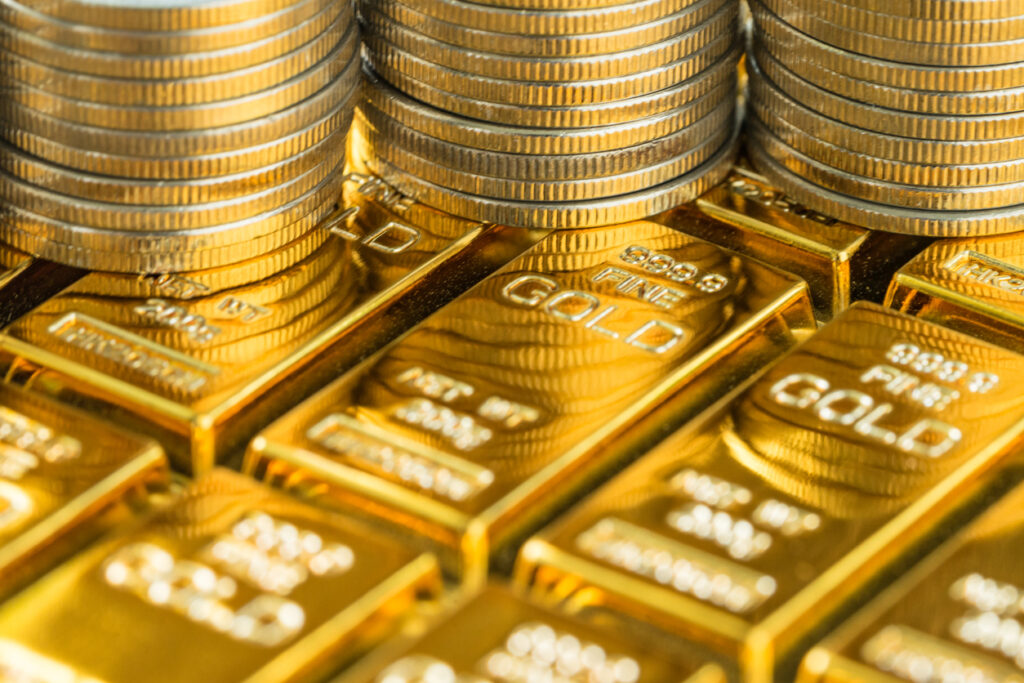
Gold, which hit a jaw-dropping record above $5,500 per ounce in late January 2026, has pulled back. As of mid-June, it’s trading in the $4,300 to $4,400 range. Silver, which broke above $120 per ounce earlier this year, has similarly corrected and is now hovering closer to $70. On the surface, that might sound like the window has closed.
It hasn’t. Not even close.
Here’s the perspective that matters: gold today is still roughly 29% higher than it was just one year ago. Silver has climbed more than 150% over the past twelve months. Even after the pullback, both metals are trading at levels that would have seemed extraordinary by any historical standard just two years ago. If you have gold or silver jewelry sitting in a drawer, it is still worth significantly more right now than it was worth in 2024 — and getting a pawn loan or selling outright at today’s prices is still a very strong move.
Let’s talk about why the correction happened, what the market looks like right now, and what it means for you as someone who might be holding precious metals in San Jose.
Why Prices Pulled Back — And Why It’s Not a Reason to Wait
Markets don’t move in straight lines. Gold’s 65% surge in 2025 was historic, and after that kind of run, a consolidation period is normal and expected. Several specific factors drove the recent correction.
The biggest was the US-Iran conflict, which began in late February 2026 and sent oil prices above $100 per barrel. Rising oil costs reignited inflation fears, which in turn caused markets to price out any chance of Federal Reserve rate cuts in 2026 — and even start speculating about potential rate hikes. Since gold and silver don’t pay interest or dividends, they tend to underperform when interest rate expectations rise. That dynamic weighed on both metals for several months.
At the same time, a stronger US dollar — which typically moves inversely to precious metals prices — added further headwinds. The result was a meaningful correction from the January highs.
But here’s what changed this week: the United States and Iran announced a ceasefire agreement, set to be signed in Switzerland. Oil prices immediately dropped to a two-month low. Inflation expectations eased. Gold jumped more than 2% in a single session, and silver surged nearly 3%. The structural forces that drove precious metals higher — central bank buying, fiscal deficits, long-term dollar weakness, and geopolitical uncertainty — haven’t gone anywhere. They were temporarily overshadowed by one specific event. Now that event is resolving.
The broader bull market in gold and silver remains intact. The long-term price uptrend that began in 2019 for gold, and 2020 for silver, has not broken. Major institutional forecasters — JPMorgan has a year-end gold target of $6,300, Bank of America has projected silver in the $135 range or higher — haven’t abandoned their bullish outlooks. What we experienced was a correction inside a bull market, not the end of one.
For someone holding gold or silver jewelry, this is actually a useful moment. Prices are off their peaks but still historically elevated. If you’ve been thinking about a pawn loan or wondering what your pieces are worth, the current market gives you a realistic, grounded number rather than a peak-frenzy appraisal. And if prices recover toward those institutional targets later in 2026, the value of what you’re holding only grows.
The Smarter Question: Sell or Pawn?
One of the most common conversations we have at R&J Jewelry and Loan is the one between selling and pawning. People often come in assuming they have to choose between getting cash and keeping their jewelry. The truth is more flexible than that — and understanding the difference can save you from a decision you later regret.
When selling makes sense: If a piece has no sentimental value, hasn’t been worn in years, and you don’t anticipate wanting it back, selling outright puts the most cash in your pocket immediately. With precious metal prices still elevated, selling gold or silver jewelry right now nets you a strong return compared to what those same pieces would have fetched in 2023 or early 2024.
When a pawn loan makes sense: If you need cash temporarily — to cover an unexpected expense, bridge a gap, or handle a short-term crunch — a pawn loan lets you leverage the value of your jewelry without permanently parting with it. You get cash now. You repay on your timeline. Your piece comes back to you. This is especially worth considering when prices have pulled back from their highs: if you sell today and prices surge back toward $5,500 or beyond, you’ve permanently surrendered a piece that might have been worth more to hold. A pawn loan removes that risk.
At R&J, we offer both options. Our job isn’t to push you one way or the other — it’s to give you an accurate, fair appraisal and let you make the decision that fits your situation.
Silver’s Overlooked Story: Industrial Demand Makes It Different
While much of the public conversation about precious metals focuses on gold, silver has its own compelling narrative that’s worth understanding — especially if you’re sitting on silver flatware, sterling jewelry, or silver coins.
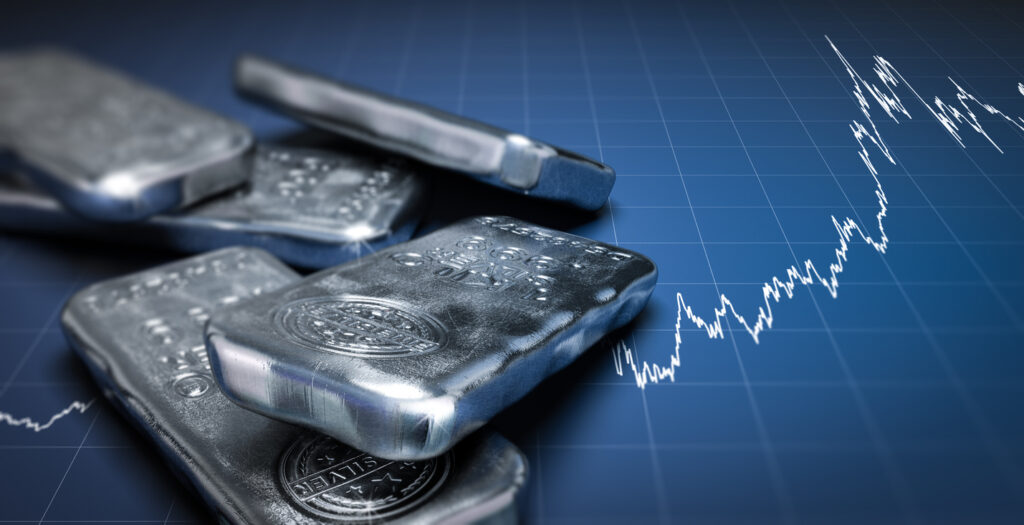
Silver is not just a monetary metal. More than half of annual silver demand now comes from industrial applications: solar panels, electric vehicles, AI computing infrastructure, medical devices, and consumer electronics. That industrial demand does not pause for Federal Reserve decisions or geopolitical events. It is driven by long-term structural trends — the global energy transition, the buildout of semiconductor manufacturing, the expansion of EV fleets — that are years or decades in the making.
This dual nature makes silver’s price story more complex than gold’s, but it also provides a floor beneath prices that pure monetary metals don’t have. Even as speculative investment demand cooled during the US-Iran conflict, industrial buyers kept purchasing. Silver is, as one analyst put it recently, something without which you literally can’t build anything in a modern economy.
For the average person holding sterling silver flatware from a wedding gift list, or a collection of silver coins inherited from a grandparent, this matters. Your silver isn’t just a commodity that goes up and down with investor sentiment. It has genuine, growing industrial utility backing its value. Right now, with silver around $70 per ounce — still dramatically higher than it was two years ago — getting an appraisal is a genuinely worthwhile exercise.
What You Might Be Sitting On and Not Realize
People routinely underestimate what’s in their own possession. Here are some categories of items we see regularly at R&J that tend to surprise people with their current value.
Estate jewelry: Pieces inherited from parents or grandparents were often made when quality standards were different — heavier gold settings, larger stones, more intricate metalwork. Estate pieces can carry significant value both in their metal content and as collector or antique items.
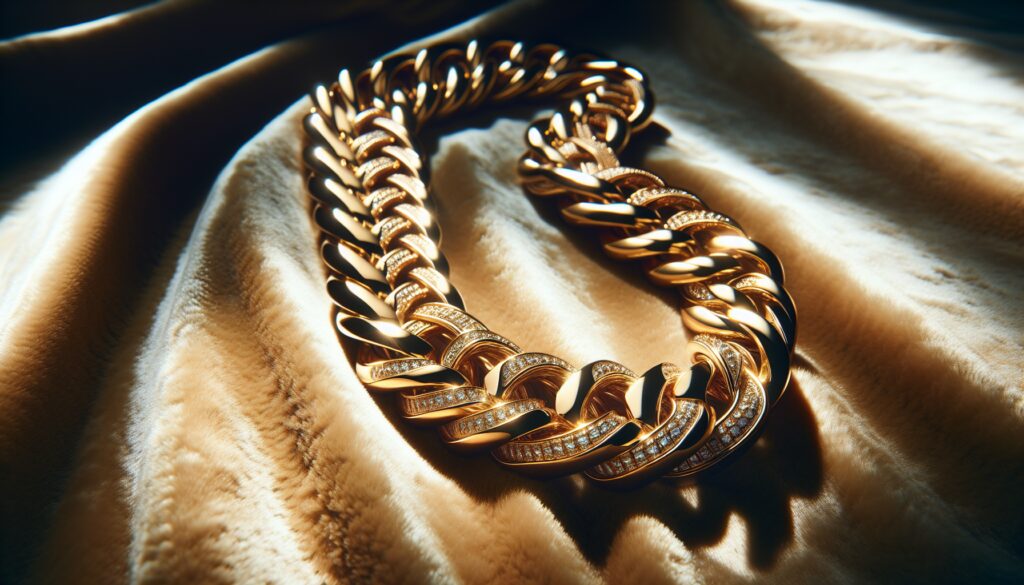
Gold chains and bracelets worn decades ago: Yellow gold was deeply fashionable in the 1980s and 1990s. Heavy gold rope chains, herringbone bracelets, and gold hoop earrings from that era are made of real gold — often 14K or 18K — and they carry meaningful value at today’s spot prices. A 14K gold necklace that weighs an ounce is worth several thousand dollars right now.
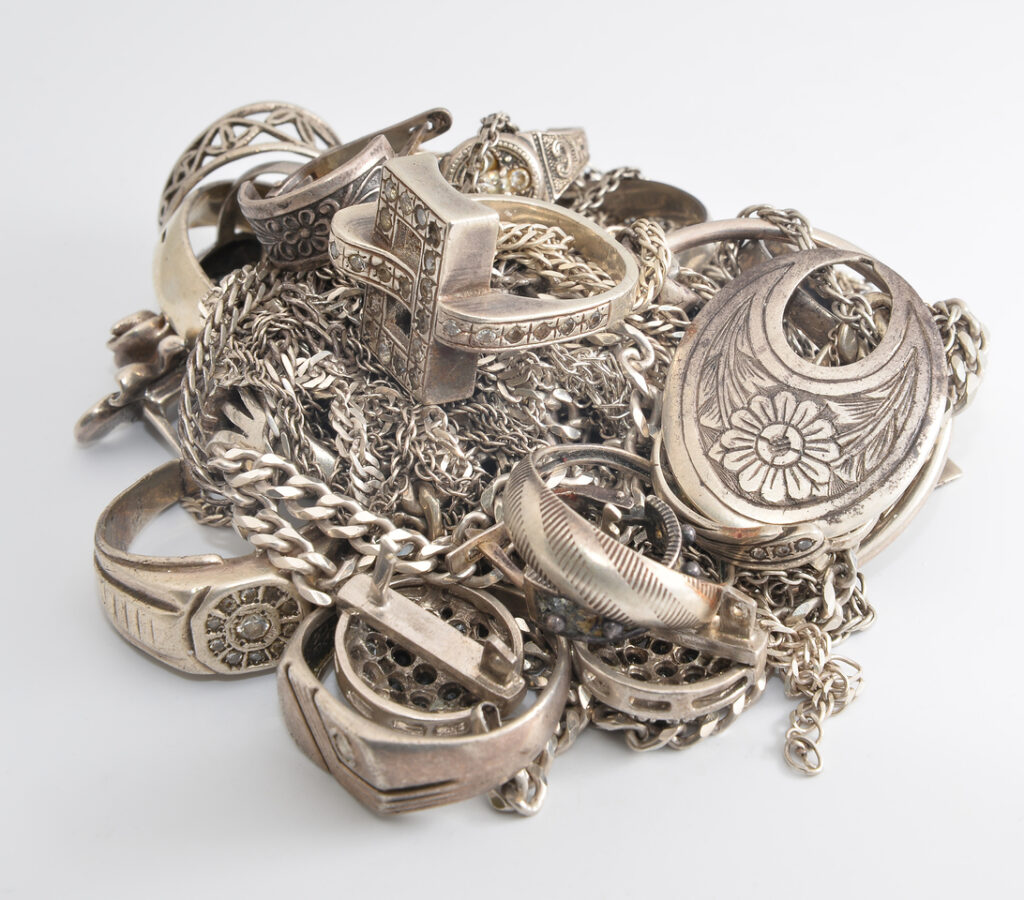
Silver sets no one uses: The sterling silver flatware and serving pieces that made their way into so many households as wedding gifts have sat largely unused for decades as dining habits changed. But sterling silver is 92.5% pure silver by weight. A full flatware service for twelve can contain a surprising amount of silver, all of it worth considerably more than it was even eighteen months ago.
Old coins: Pre-1965 US dimes, quarters, and half dollars are 90% silver. US silver dollars from the Morgan and Peace eras are 90% silver as well. If you have a coffee can or a bag of old coins tucked away, it’s absolutely worth having them assessed. The silver content alone may be worth more than the face value by multiples.
Vintage watches: Not every old watch is valuable, but some are — and the range is wide enough that it’s always worth asking. A vintage Rolex or Omega in working condition can command a loan significantly above its material value. Even watches with sentimental but not designer value sometimes contain gold cases worth more than expected.
Timing, Patience, and the Practical Reality
Here’s something we tell every customer who walks through our door: don’t let perfect be the enemy of good.
Yes, gold hit $5,500 in January. If you had sold in January, you would have gotten peak prices. But if you didn’t sell in January, you haven’t missed your window. You’ve simply missed the top — and nobody, not even the most sophisticated institutional investors, consistently sells at the top. Gold today is still roughly $1,800 to $2,000 per ounce higher than it was two years ago. Silver is still more than $40 per ounce higher than it was in early 2024. These are real, meaningful gains in the value of what you’re holding.
The question isn’t whether you missed the peak. The question is what your current needs are and what your current options look like. If you need cash now, the market is still favorable. If you can wait, there are credible arguments — backed by major bank research and central bank behavior — that prices have further to go once the current headwinds clear.
Either way, the first step is knowing what you have. An appraisal costs you nothing at R&J Jewelry and Loan. You walk in with your pieces, we assess them accurately and honestly, we tell you what they’re worth in today’s market, and you decide what to do with that information. No obligation, no pressure.
The One Thing That Hasn’t Changed
Markets fluctuate. Prices rise and fall. Geopolitical events create noise. The Federal Reserve pivots its messaging. All of that is normal, and all of it affects spot prices for gold and silver week to week.
What hasn’t changed is the underlying reality: people in the Bay Area are carrying more value in their jewelry boxes than they typically realize, and a trusted local pawn shop with experienced appraisers is one of the fastest, most flexible ways to access that value when you need it. No credit application. No bank appointment. No waiting for a loan approval that may or may not come through.
The gold and silver market in 2026 has been a wild ride. But even after the correction, even with the uncertainty around the Fed’s next move and the geopolitical landscape, precious metals are still telling a story that rewards the people paying attention.
Come in, open that jewelry box, and let’s see what your story looks like.
R&J Jewelry and Loan San Jose, California
Licensed pawn broker. Competitive rates. Honest appraisals. No appointment necessary.
Precious metal prices are dynamic and fluctuate daily based on market conditions. All loan offers are based on current spot prices and item condition at the time of appraisal. Past market performance is not indicative of future prices.